


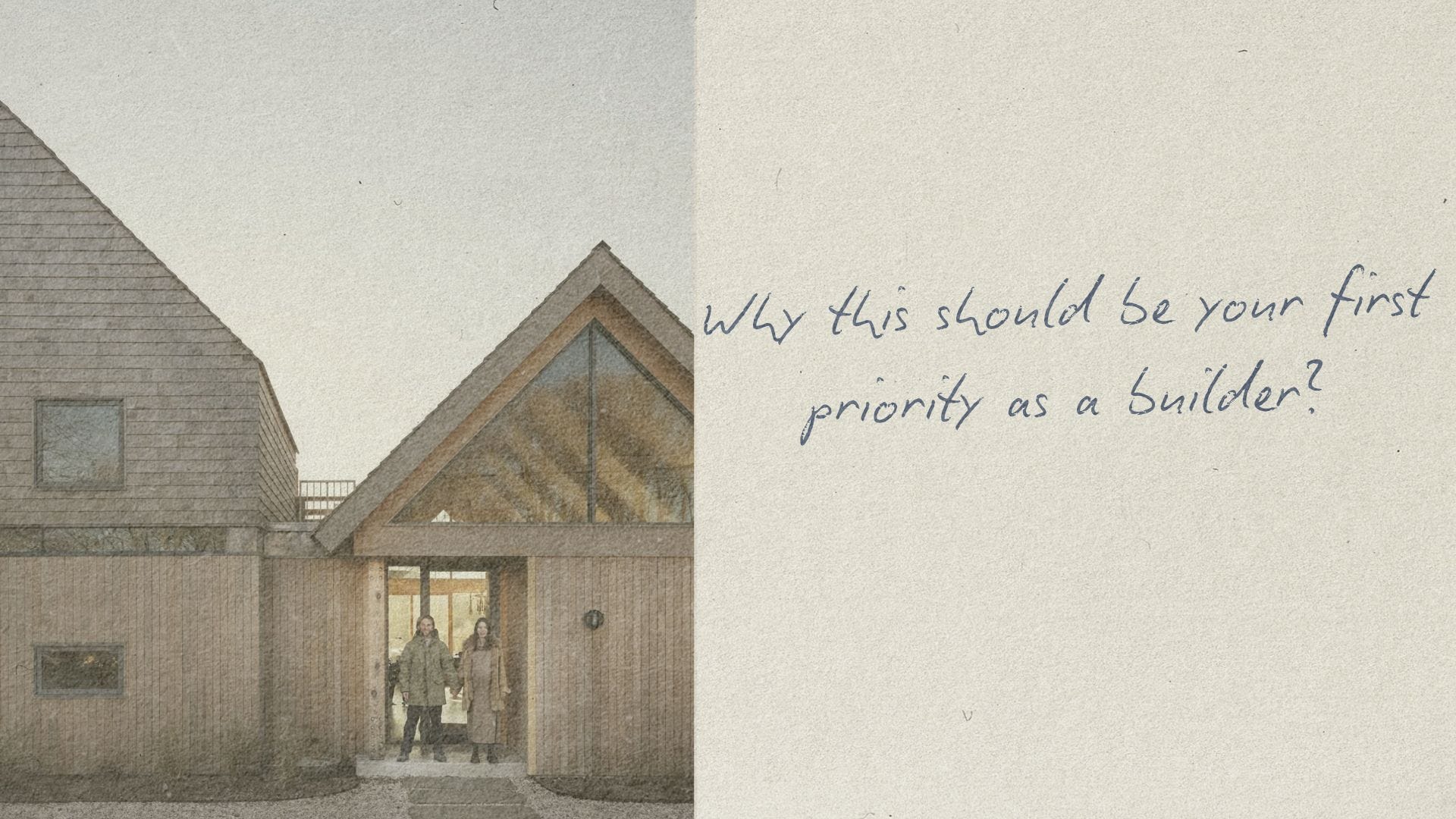
I never thought I would start a letter from a discussion I had with a 10yo.
Intention: my son asked what intention meant. And to be honest I didn’t know what the proper definition was ;) But took time to come back on situations I was using it
And the definition I wanted to share with you: we learn the importance of intention when something works on paper but feels wrong in reality.
Most builders start without intention because it’s invisible at first. You can move fast without it. You can design, raise money, open doors, get press. Everything looks fine. Sometimes it even performs.
And then one day, you’re inside the place you built… and you don’t feel anything particular.
And that moment teaches you more than any framework.
Intention only becomes obvious when it’s missing. (You can deep dive into this in my book Hospitality is not a spreadsheet)
Because what’s missing isn’t execution. It’s intention.
Too many hospitality projects start with a building. A visit. A deal. A this could work.
Then everything else is built backwards, trying to justify the square meters. The concept, the brand, the story, the experience all arrive later, like layers added to make the project stand out.
But hospitality doesn’t work like that. At least not the kind of our stays.
The places that mark us don’t exist because someone found a good asset. They exist because someone had something to say. A belief. A way of seeing the world. The building came after, as a tool to express that point of view in the real world.
A point of view doesn’t mean being loud or provocative. It can be quiet. Subtle. Almost invisible. But it has to be real. It’s the reason why this place exists here, now, and not somewhere else, not in another form, not by another person.
When founders start with conviction, everything changes. Decisions stop being arbitrary. The place stops trying to please everyone. It naturally attracts people who feel aligned, and repels those who aren’t. Not by strategy, but by coherence.
And that coherence is what slowly turns a place into a destination.
Not because it was designed to be one, but because it stands for something beyond itself. Something people can feel, even if they can’t fully explain it.
And it’s not a branding exercise. It’s a founder mindset. A way of approaching hospitality not as a product to optimize, but as a position to defend. A stance you’re willing to live with, day after day, inside the place you’re building.
In the rest of this letter, I want to go deeper into why a point of view should always come before the building, how it helps founders craft truly unique destinations, and why this way of building is not compatible with every model, and that’s perfectly fine.
Because the hospitality I’m talking about here is the one you build with your own hands.

Start with conviction and then the building.
Most founders start in the wrong place.
They find a building.
Then they ask themselves what to do with it.
That’s already too late.
A hospitality project should start with a belief. A stance. A reason to bring people together. The building is just the vessel.
A point of view can be many things:
bringing people back to the coast instead of cities
empowering a forgotten territory
slowing people down
reconnecting people to craft
creating a refuge for a specific community
It doesn’t have to be loud. But it has to be clear.
Because that point of view will quietly shape every decision you make after.
A point of view is posture.
This is where many people get confused.
A point of view is not a logo.
It’s not a tagline.
It’s not a color palette.
It’s the internal compass of the founders. (by the way
It answers questions like:
Who is this place really for?
What kind of life does it encourage?
What do we refuse, even if it makes money?
When the point of view is strong, decisions get easier. Pricing, programming, food, music, partnerships, even silence. Everything aligns.
When it’s weak, you compensate with decoration.
Why this should be your first priority as a builder
Because uniqueness comes from coherence.
People don’t remember places because they were well executed. Your board does.
They remember them because they felt something consistent.
A clear point of view:
Creates a magnetic audience, attracts collaborators naturally, filters the wrong clients without effort and gives your team something to stand behind
And I’m not saying that this is easy to get huh
Most importantly, it gives you energy on the hard days.
And there will be hard days.
Destination is a consequence.
Everyone wants to build a destination. (And I’m the one promoting it too…)
But destinations are not designed. They emerge.
They emerge when a place stands for something beyond itself. When it’s rooted in a belief that resonates with people who were already looking for it, without knowing where to find it.
That’s why some places feel inevitable. As if they had always been meant to exist there, like they couldn’t have happened anywhere else.
That’s point of view at work.
A necessary clarification
This letter is not for everyone.
It’s not for founders who live in decks.
Not for those building teams to run places they won’t inhabit themselves.
That’s another game. I don’t play it. I don’t judge it. I just don’t know it.
The hospitality I’m talking about is the one you build with your own hands. The one you feel in your body. The one where your name is quietly embedded in the walls.
I’m sure there are excellent newsletters for hospitality scale rockets. This one isn’t it.
One last thing
If you start with a building, you’ll spend your time filling space.
If you start with a point of view, you’ll spend your time building meaning.
Only one of the two turns a place into a destination.
And only one of the two survives trends.
Next week I would like to dive into how to actually start your place project and share with you the way I work and put the first steps into it.
Thanks again for being here and please, do not hesitate to share any thoughts or start a conversation
Well said :)