


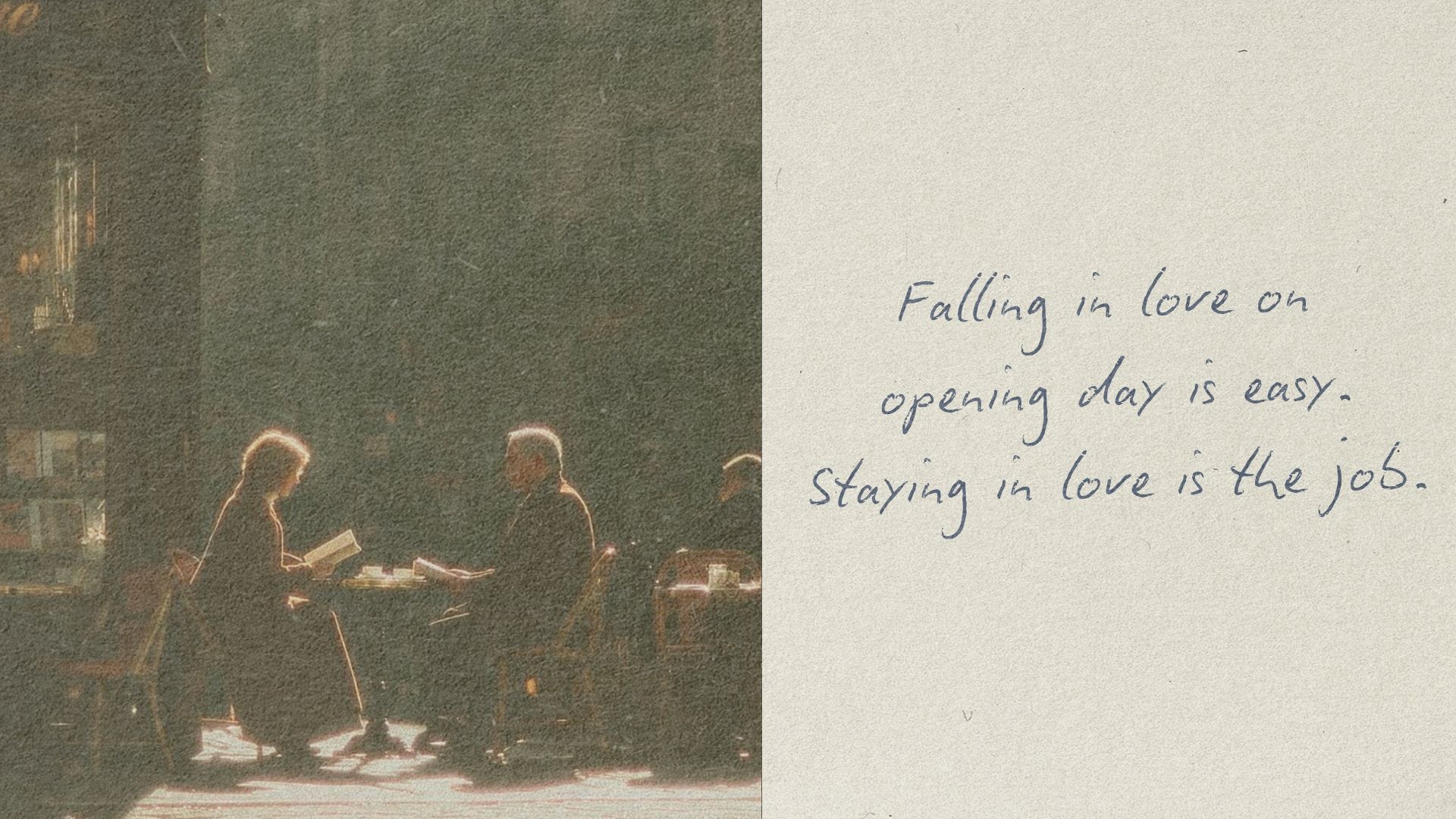
(sorry guys, didn’t have time to work on all my images so we’ll have only one this week ;))
Time. Yes time.
I can tell you that most places builders don’t underestimate costs, We all underestimate time.
Not the time it takes to build a place.
The time it takes for a place to be understood, loved.
I’ve been thinking about this a lot lately. I’m on the road again, heading to two new projects, two new brands, and somewhere between the kilometers and the coffee stops, I caught myself asking a question I now ask every single time.
Am I ready to still be in love with this place in six years?
Not on opening day. That part is easy. Everyone is in love on day one.
I mean on year six. When the place isn’t new anymore. When the problems are known. When the story has already been told once or twice. When the place starts asking things back from you.
A place doesn’t become loved when it opens. A place becomes loved when it repeats itself long enough for people to trust it.
This is where a lot of projects break, not financially, but psychologically.
Founders open a place, put everything into it, and wait for a reaction. Press. Buzz. Full rooms. Recognition. And when it doesn’t happen fast enough, doubt creeps in.
Maybe the concept is wrong. Maybe the location isn’t good. Maybe people don’t get it.
Sometimes that’s true. But often, it’s just too early.
Love in hospitality is a habit
Guests don’t fall in love the first time. They observe. They come back. They test you, usually without saying a word.
Is the coffee the same on a bad day?
Is the welcome still warm when it’s busy?
Does the place feel reliable, not just exciting?
And this is something founders often forget. Most guests don’t want to discover a place. We all want to rely on it. We all want to know it will be there, doing its job, quietly, consistently.
That takes time.
There’s also a mismatch of clocks that creates a lot of tension. Entrepreneurs live on survival time. Cash flow, rent, payroll, pressure.
But places live on human time. Memory, ritual, repetition.
You can speed up construction. You can accelerate marketing. You cannot rush attachment.
The most dangerous moment usually comes between month 6 and 12. The novelty is gone. The place is no longer new, but it hasn’t become obvious yet. This is when many founders panic and start changing things. New menu. New positioning. New story. New tone of voice.
They think they’re evolving.
In reality, they’re erasing the memory people were just starting to build.
Places that end up being loved are often boringly consistent at first. Not because they lack ideas, but because they respect the time it takes to settle into people’s lives.
The irony is that many places we now call timeless were ignored for years. What looks like success is often just patience that survived doubt.
So maybe the real question isn’t is my place good enough?
Maybe it’s can I hold the line long enough for people to attach to it?
That’s not the romantic side of hospitality.
But it’s the one that builds places that last.
— > Lets goooo deeper on this, I have a lot to share with you folks
Here are very concrete, field-tested practices that help a place survive long enough to be loved. Not theories. Stuff you can actually do.
I’ll keep it tight and operational:
