


Hi folks! This one is special as we have hundreds of new readers who joined last week. So first, thank you all for joining. Thank you for the one staying, and in a week, it will be my one year writing every week. Can’t wait to share this special one
And yes we can say it, hospitality became cool.
And I still remember that, back in 2022, when I was explaining LOBBY to my wife, she looked at me like I was starting some kind of political lobbying business. Which, to be fair, is not completely absurd when your company is called LOBBY and you’re waving your hands trying to explain places with soul like someone who had too much coffee and not enough revenue.
At that time, hospitality was still a niche conversation. Of course hotels, restaurants, cafés and places existed (Yes breaking news, people needed to sleep and eat before 2022), BUT the idea of building around hospitality as a cultural, creative and entrepreneurial field still felt a bit strange to many people.
It wasn’t yet the obvious thing.
Now it feels like everyone wants to open a place. Fashion people want cafés. Designers want guesthouses. Creative studios want restaurants. Real estate people want lifestyle hotels. Brands want physical spaces. Investors want community-driven hospitality concepts, which is always a dangerous sentence when said too fast in a meeting room with bad coffee.
And c’est ok like they say
From the outside, hospitality is extremely seductive. It has all the ingredients of a beautiful story: a room, a mood, music, people, objects, food, light, a sense of belonging, a place where taste is not just shown but lived. It feels more human than another app, more tangible than another content platform, more memorable than another digital brand promising to connect communities while everyone is alone behind a screen.
But I don’t think hospitality became trendy only because it photographs well.
That would be too easy.
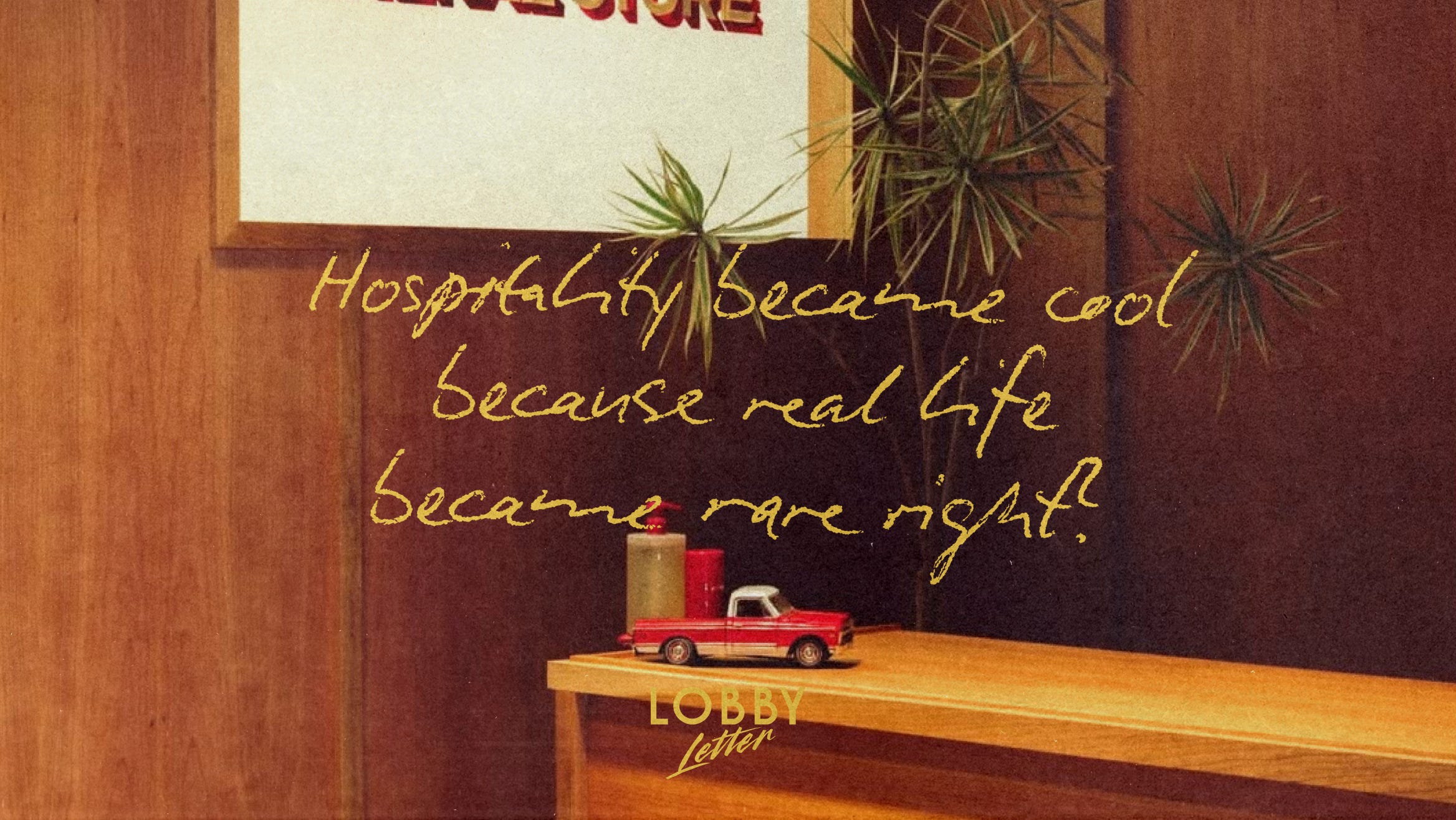
I think hospitality became trendy because real life became rare.
After years of digital brands, remote work, online communities, infinite feeds, and relationships managed through notifications, people started craving physical rooms again. Not just nice rooms. Useful rooms. Rooms where something happens. Rooms where you can meet someone without sending a Calendly link first, which, let’s be honest, is already a small act of civilisation.
A place as we consume them is now a proper medium.
A way to express taste, gather people, create culture, build community, and make a brand feel real without asking anyone to download an app.
That’s powerful and dangerous at the same time
Because when hospitality becomes trendy, a lot of people fall in love with the image of the job before understanding the responsibility behind it. They love the idea of having a place (I talked about it last week)
The harder question is whether they love holding one.
And that’s where the trend starts to separate people.
