


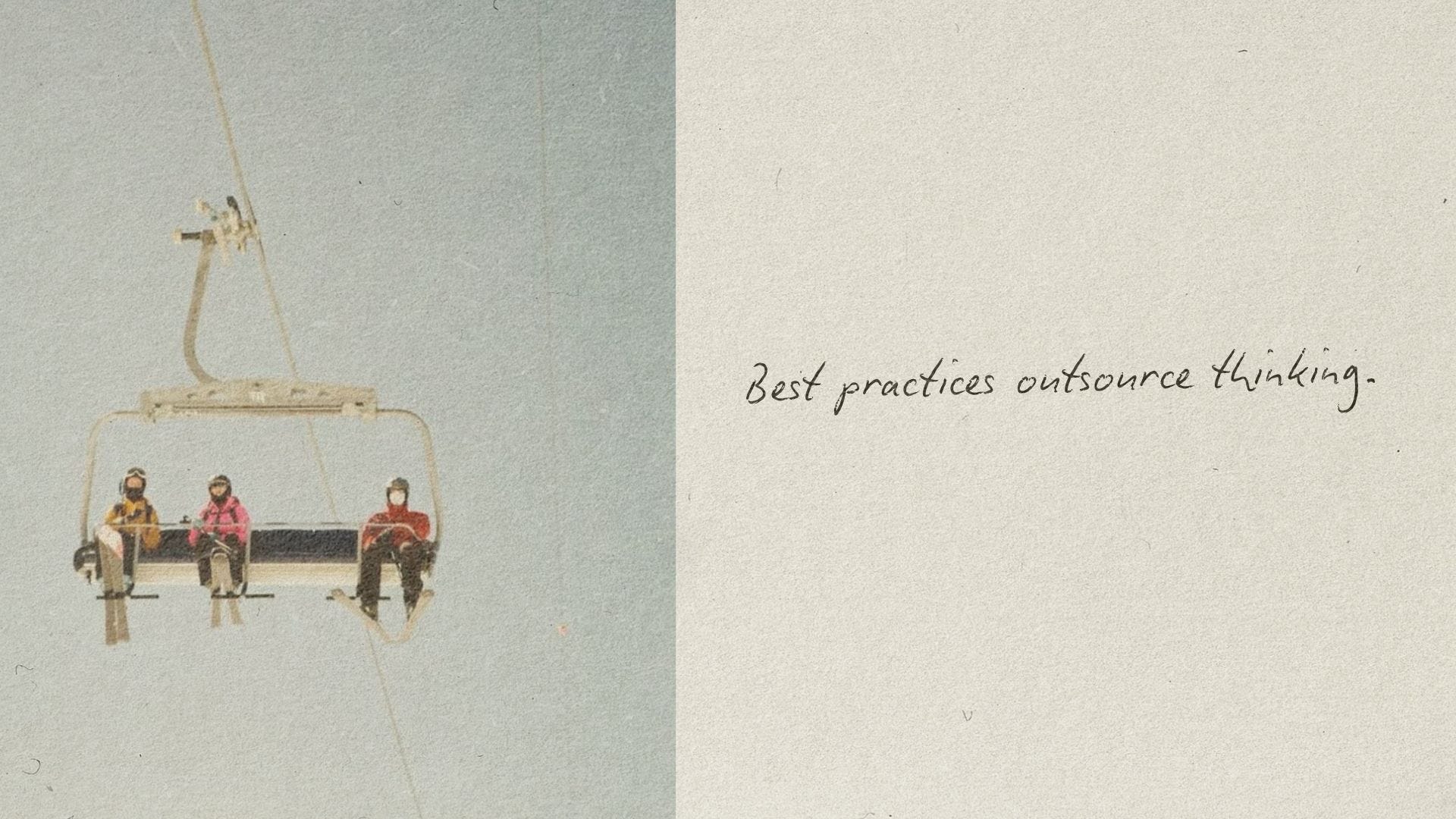
It’s late December. That strange in-between moment where the year hasn’t ended yet, but your head already moved on.
This is usually when advice gets louder.
Here’s what worked bro
Here’s the playbook
Here’s how to do it right next year
Here’s how changing napkins changed the way I manage my team
Slides are polished. Frameworks are finalised. Best practices are wrapped like gifts and passed around as if context didn’t exist. And yet, when I look back at the places, projects, and people that truly moved me this year, none of them followed a best practice.
Not one.
They followed something much harder to explain like a territory, a constraint, a personal obsession, a human decision that wouldn’t survive a benchmark comparison.
Best practices are reassuring. They calm investors. They align teams. They give the impression that there is a right way to do things.
But they also do something else, quietly:
They outsource thinking.
What worked somewhere else, with other people, at another time, under different pressures, becomes a rule instead of a reference.
And the more our industries mature, the more we mistake repetition for wisdom.
Before turning the page and starting another year applying inherited answers, I think it’s worth pausing and asking something uncomfortable:
What if the most dangerous thing we copy… is not what failed, but what worked?

For LOBBYLetter+ readers, I want to go deeper into why best practices are so tempting, why they quietly flatten ambition, and how to decide // concretely // which rules deserve to be ignored.
